


notefield in the field / Construction
Construction site reports, from your voice notes.
After the site visit, speak your findings by location and trade. notefield organizes snags, decisions, and actions into a report you review before sharing.
7 days free · No credit card required
Less typing. More follow-through.
You say it. Your report takes shape.
The second-floor courtyard window seal needs redoing. The contractor should confirm a slot on Monday. We’ll check for leaks afterwards.
Construction site report
Review- Location
- Second floor · courtyard window
- Finding
- Window seal needs redoing
- Action
- Ask the contractor to confirm their slot on Monday
- Next check
- Check for leaks after the repair
- 01
You speak.
Speak your findings on site.
- 02
notefield organizes.
Find each snag and its location.
- 03
You move forward.
Review, then share with contractors.
From report to follow-up
The right details, before you share.
Location and trade
Check the building, floor, references, and contractor name. After a noisy site visit, recap important points somewhere quiet.
Confirmed decisions
Separate observations, proposals, and agreements. A date awaiting confirmation stays open.
The next action
Check who does what and by when before sharing the report with the team.
For site managers, project leads, and contractors who debrief after a visit. Keep plans, inspections, and approvals in your specialist tools.
See a construction demo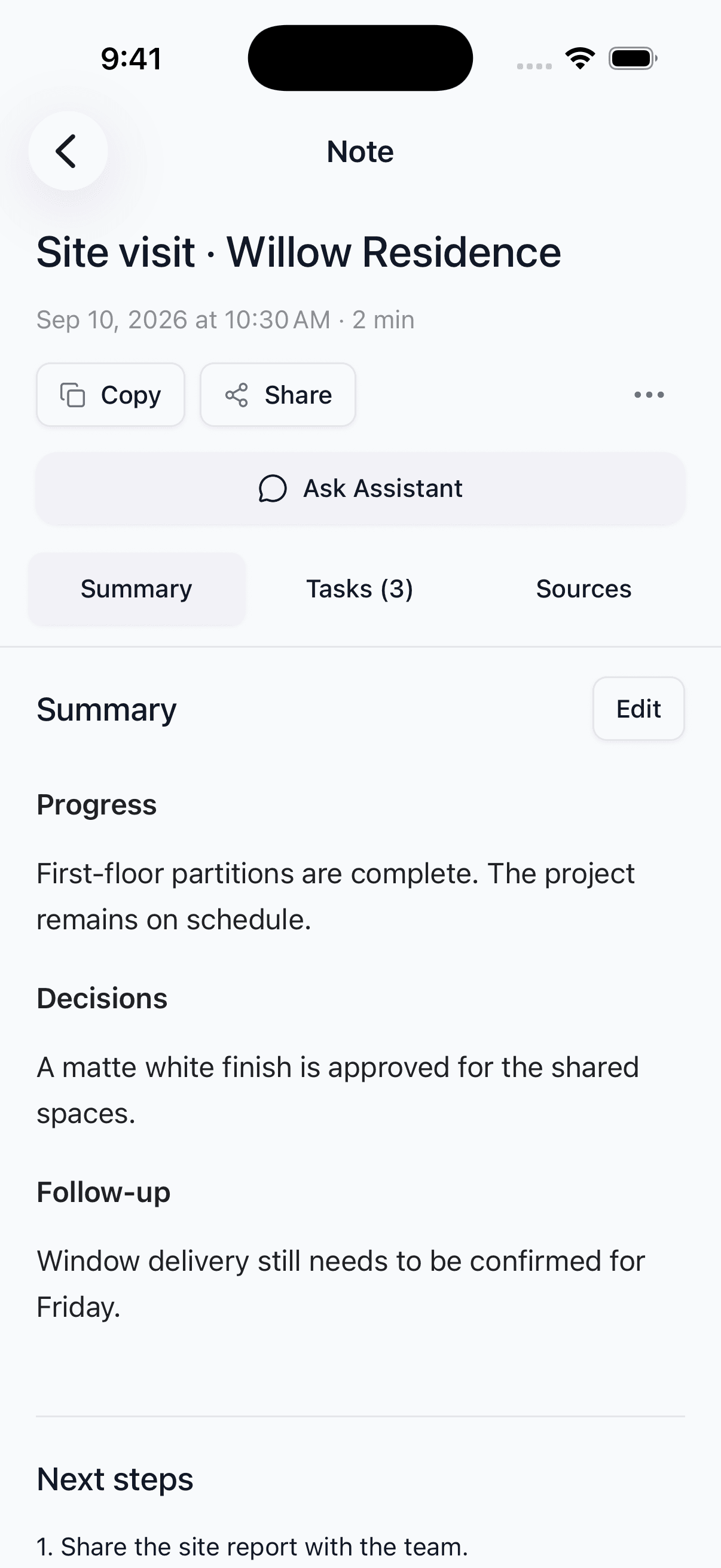
What belongs in a construction site report?
Include the date, attendees, areas inspected, findings by trade, decisions, and actions with owners and deadlines. Separate closed issues from open ones. The notefield summary is a starting point to review; drawings, photographs, and contractual records remain in your normal project documentation.
Can I dictate after the visit instead of recording a meeting?
Yes. A voice debrief lets you recap the useful points after your walk-through. Say what you observed, what was agreed, and what remains uncertain. A debrief reflects your account of events; it cannot include remarks you did not report.
What if the site is noisy?
Noise and overlapping speech can affect transcription. Get closer to the speakers where safe, or recap the important points somewhere quiet. Review trade names, measurements, quantities, and dates before treating the report as a basis for assigning work.