A template ready to fill in
The Word file includes an editable template and a completed fictional example. Free download, no signup required.
Prefer to dictate after your visit? Prepare a viewing report from voice notes ↗
A property viewing report records a viewer’s feedback, unanswered questions and the agent’s next action. It should distinguish verified property facts, the buyer’s own comments and the agent’s interpretation. A seller update summarizes useful feedback without unnecessarily sharing the viewer’s personal details.
What should you record after a viewing?
| Item | Example wording | Type of information |
|---|---|---|
| Property and visit | Property A-17, 9 September at 14:00 | Reference and context |
| Positive feedback | “The living room feels bright” | Comment attributed to the viewer |
| Concern | Viewer wants to check evening noise | Open question |
| Technical detail | Floor area to be taken from the reference document | Fact requiring verification |
| Interest | A second viewing was requested | Observed behavior |
| Follow-up | Agent to propose two times before Friday | Assigned action |
Do not reduce every viewing to an interest score out of five. A requested second viewing, an outstanding document or an explicit concern is more useful for planning the next step. “Seems ready to buy” is not a confirmed commitment.
Copyable property viewing report template
PROPERTY — Internal reference and address
VIEWING — Date, time, agent and contact reference
REQUIREMENTS — Relevant criteria expressed for this viewing
POSITIVES — Viewer feedback, using their wording where helpful
CONCERNS — Expressed reservations and their importance to the decision
QUESTIONS — Requested information and the person responsible for answering
OBSERVED INTEREST — Explicitly stated intention or requested action
DOCUMENTS — Promised, supplied or still requiring verification
NEXT ACTION — Owner, action and agreed date
SELLER UPDATE — Useful feedback, open question and planned next step
The template is a record of the conversation. It is not a property survey, a condition report or a transaction document. Keep references to those documents rather than reproducing technical values from memory.
Worked example: a buyer asks to return
This example is fictional. It does not describe a real transaction or a notefield customer.
PROPERTY — Apartment A-17, agency reference
VIEWING — 9 September 2026, 14:00; agent: Clara; viewer: contact C-08
EXPRESSED REQUIREMENTS — Two bedrooms and access to public transport.
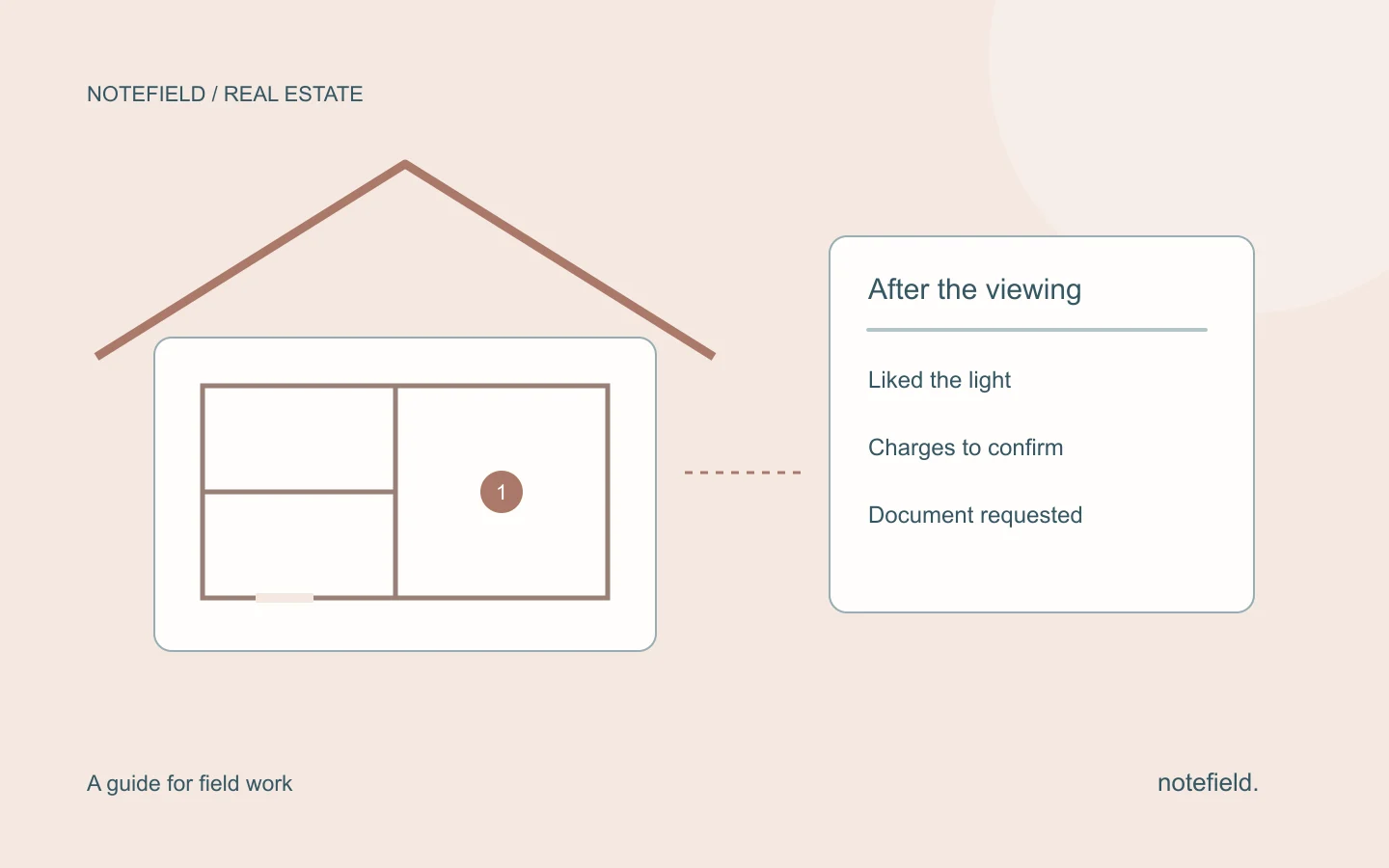
POSITIVE FEEDBACK — The viewer liked the bright living room and the separation between rooms.
CONCERN — They want to assess noise in the surrounding area later in the day.
QUESTION — Which document confirms the service charges? Clara needs to retrieve the reference before answering.
OBSERVED INTEREST — A second viewing with a relative was requested. No offer was made.
FOLLOW-UP — Clara proposes two evening slots before 11 September and shares the charges document after checking it.
“No offer was made” prevents a second-viewing request from being presented as a likely offer. The question about charges remains a document request. The agent does not invent the amount in the report.
How do you turn the report into a seller update?
A seller update answers three questions: what appealed to the viewer, what remains unresolved and what happens next? A short paragraph is often enough, with a separate request for any missing information.
The viewer liked the bright living room and the separation between rooms. They would like to return later in the day to assess the surrounding noise. We are proposing two time slots and checking the document covering service charges. A second viewing has been requested; no offer has been made at this stage.
This update describes one viewing. When reviewing multiple visits, group concerns by topic and state how many documented viewings support the observation. Do not turn one comment into “all buyers think this.” A viewing register helps distinguish isolated feedback from a recurring concern without inventing a market statistic.
From a spoken recap to a useful viewing note
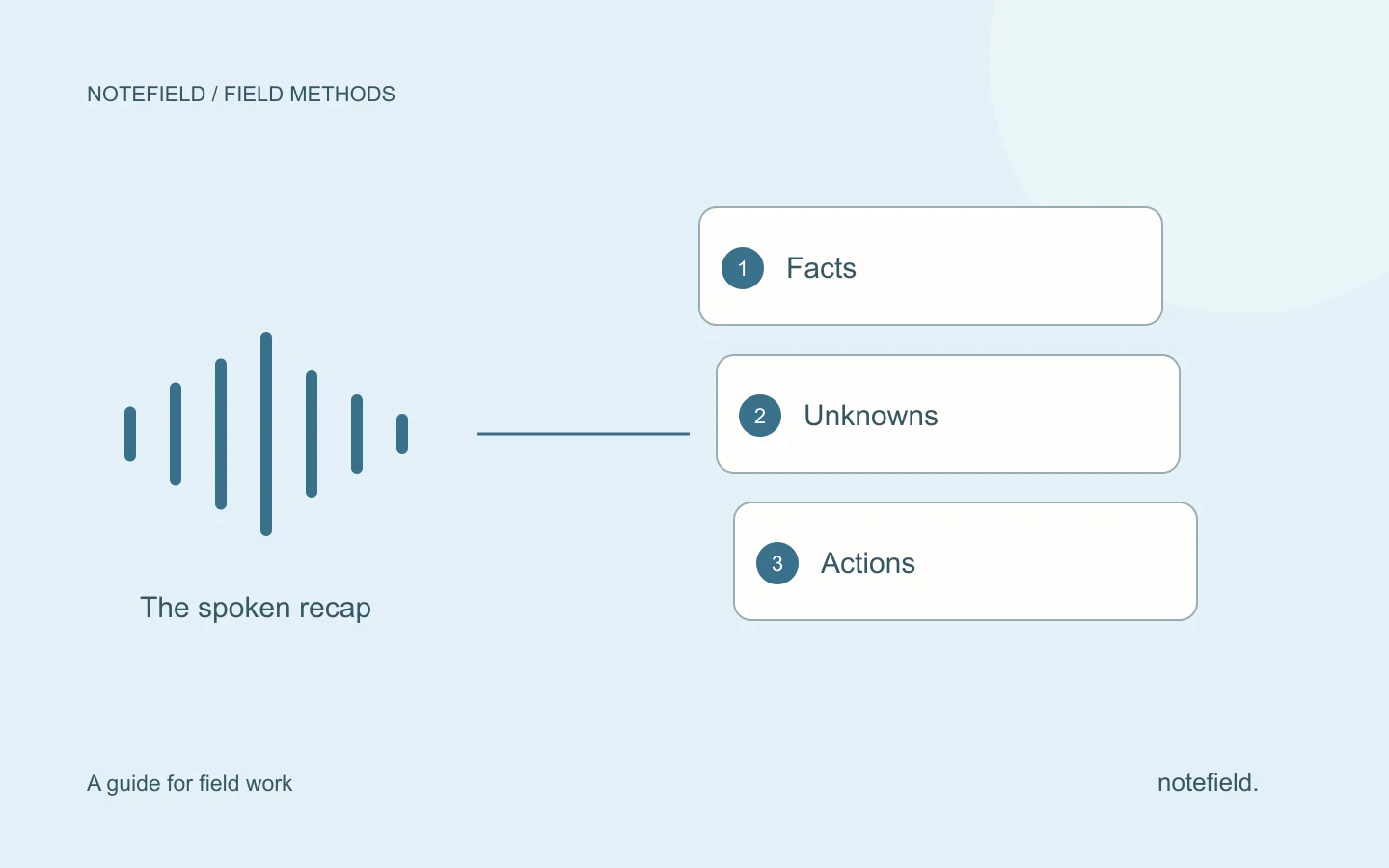
After the viewing, dictate the property reference, requirements, feedback, questions and commitments. Say who said what. “The viewer said the room feels small” reports a perception. “The room measures nine square metres” is a technical statement that needs a verified source.
The voice note structuring method separates facts, reported comments and information requiring confirmation. With notefield for real estate, that distinction helps turn the conversation or recap into a viewing report and next actions.
Review names, property references and dates before sharing. Agree recording arrangements with participants before recording the conversation itself. You can also dictate your own recap after the viewing.
Follow up with a specific next action
Turn an open question into an assigned action. “Send charges” is vague. “Clara retrieves the reference document, checks the figure and sends it to the viewer” describes the expected work. If someone else holds the document, record that dependency.
The field team action tracking method distinguishes what is waiting on the agency, seller or viewer. A follow-up is useful when it requests a specific item or proposes a next step based on the last conversation.
Before the next appointment, carry unresolved questions into a visit preparation checklist. Adapt the checklist to the property and the buyer’s project rather than turning the viewing into a generic sales interview.
Practical questions
Is a viewing report proof of a property’s condition?
No. A viewing report records feedback and follow-up. It does not replace a survey or another professional assessment. If the viewer asks a technical question, record the question and identify the document or professional needed to answer it.
What should the seller receive?
Useful feedback on the property, questions requiring an answer and the next step. Keep contact details and personal information in the agency’s appropriate system when the seller does not need them for that purpose.
Can this template be used for a rental viewing?
Yes. Adapt the acquisition wording to a rental context and keep the report focused on the property and viewing questions. Handling application documents and eligibility is a separate process.
Try it after your next viewing
Dictate the property reference, two pieces of visitor feedback, and one next action. Review the resulting note, then prepare a short seller update with the information they need. The Notefield real estate page shows how an internal note differs from a seller update using a fictional debrief.
Try Notefield after a viewing or request a demo for your agency. A proposed second viewing remains subject to confirmation; the report should not describe it as booked.